

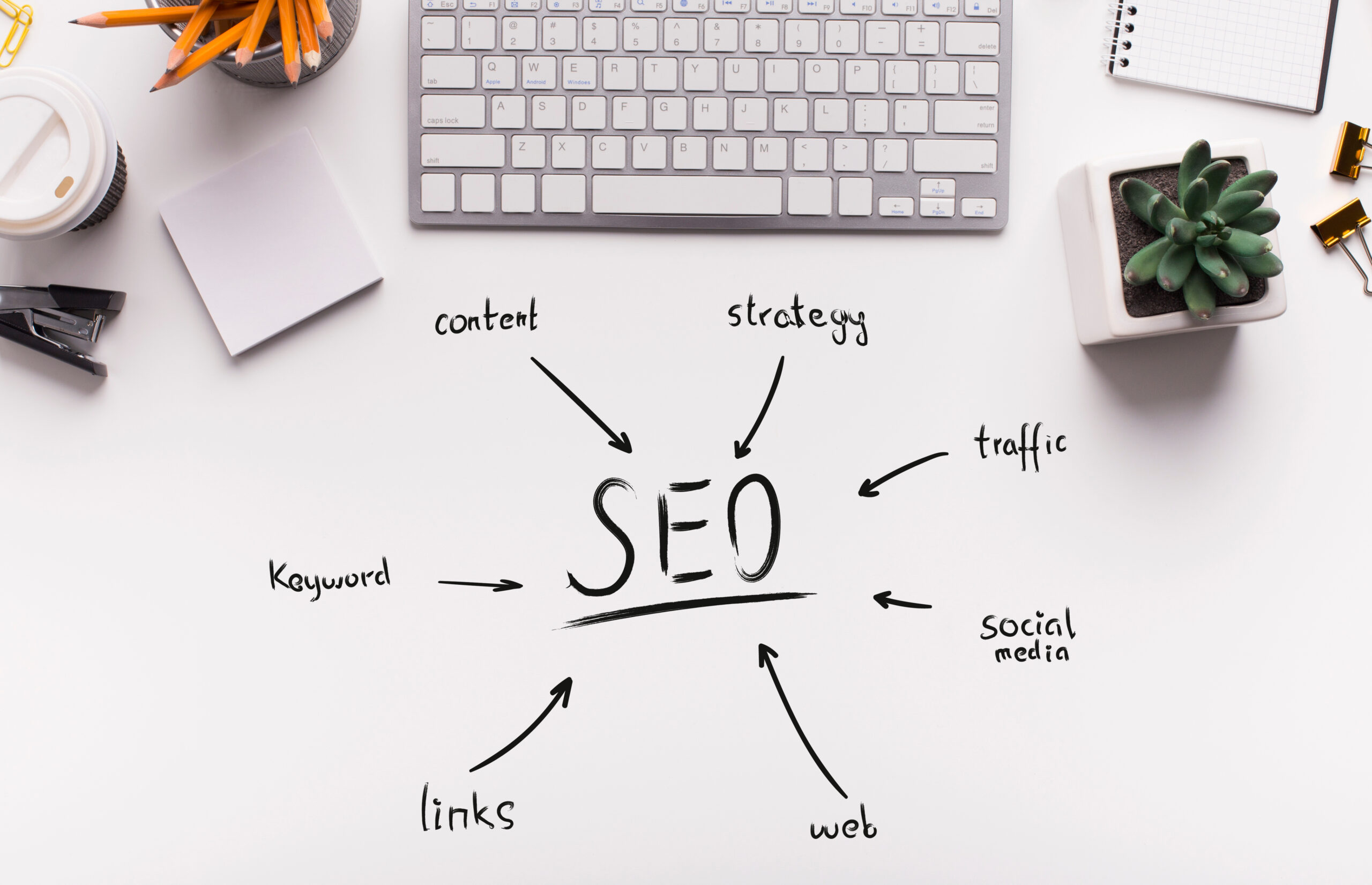
Search Engine Optimisation (SEO) is the practice of improving the quality and quantity of website traffic by increasing the visibility of a website. Here is a Marketers guide to help you get started with SEO.
Understanding SEO
SEO involves various strategies and techniques aimed at enhancing a website’s visibility on search engine results pages. The higher a site ranks, the more likely it is to be visited by users. SEO can be broken down into two main categories: On-page SEO and Off-page SEO.
On-Page SEO
On-page SEO refers to optimising individual web pages to rank higher and earn more relevant traffic. Here are key components:
- Keyword Research: Identify and target relevant keywords that potential visitors are searching for.
- Title Tags: Craft compelling and keyword-rich titles for your web pages.
- Meta Descriptions: Write informative and engaging meta descriptions to improve click-through rates.
- Header Tags (H1, H2, H3): Use header tags to structure content and highlight important information.
- Content Quality: Ensure your content is valuable, informative, and relevant to the user’s search intent.
- Internal Linking: Link to other pages within your website to improve navigation and distribute link equity.
- Image Optimisation: Use descriptive filenames and alt tags for images to improve visibility in image searches.
Off-Page SEO
Off-page SEO involves actions taken outside of your website to impact your rankings within SERPs. This primarily involves:
- Backlinks: Acquire high-quality backlinks from reputable websites to improve your site’s authority.
- Social Signals: Engage on social media platforms to increase the visibility and sharing of your content.
- Guest Blogging: Write articles for other websites to gain exposure and backlinks.
- Influencer Outreach: Collaborate with influencers in your niche to promote your content.
Technical SEO
Technical SEO focuses on improving the backend structure and foundation of a website. Key aspects include:
- Website Speed: Ensure your website loads quickly to reduce bounce rates.
- Mobile-Friendliness: Optimise your site for mobile devices, as a significant amount of web traffic comes from mobile users.
- XML Sitemaps: Create and submit XML sitemaps to help search engines crawl your site more effectively.
- Secure Website (HTTPS): Use HTTPS to secure your site and gain trust from users and search engines.
Local SEO
For businesses targeting local customers, local SEO is crucial. This includes:
- Google My Business: Claim and optimise your Google My Business listing.
- Local Keywords: Use keywords that include local terms or locations.
- NAP Consistency: Ensure your Name, Address, and Phone number are consistent across all online platforms.
- Local Citations: Get listed in local directories and relevant local websites.
SEO is an ongoing process. Regularly update your content, stay informed about algorithm changes, and continuously refine your strategies based on performance data.
By implementing these SEO best practices, you can enhance your website’s visibility, attract more organic traffic, and ultimately achieve your business goals.